
Artists in the mural capital of the world have created vistas honoring immigrant life
By Morgan Ritter
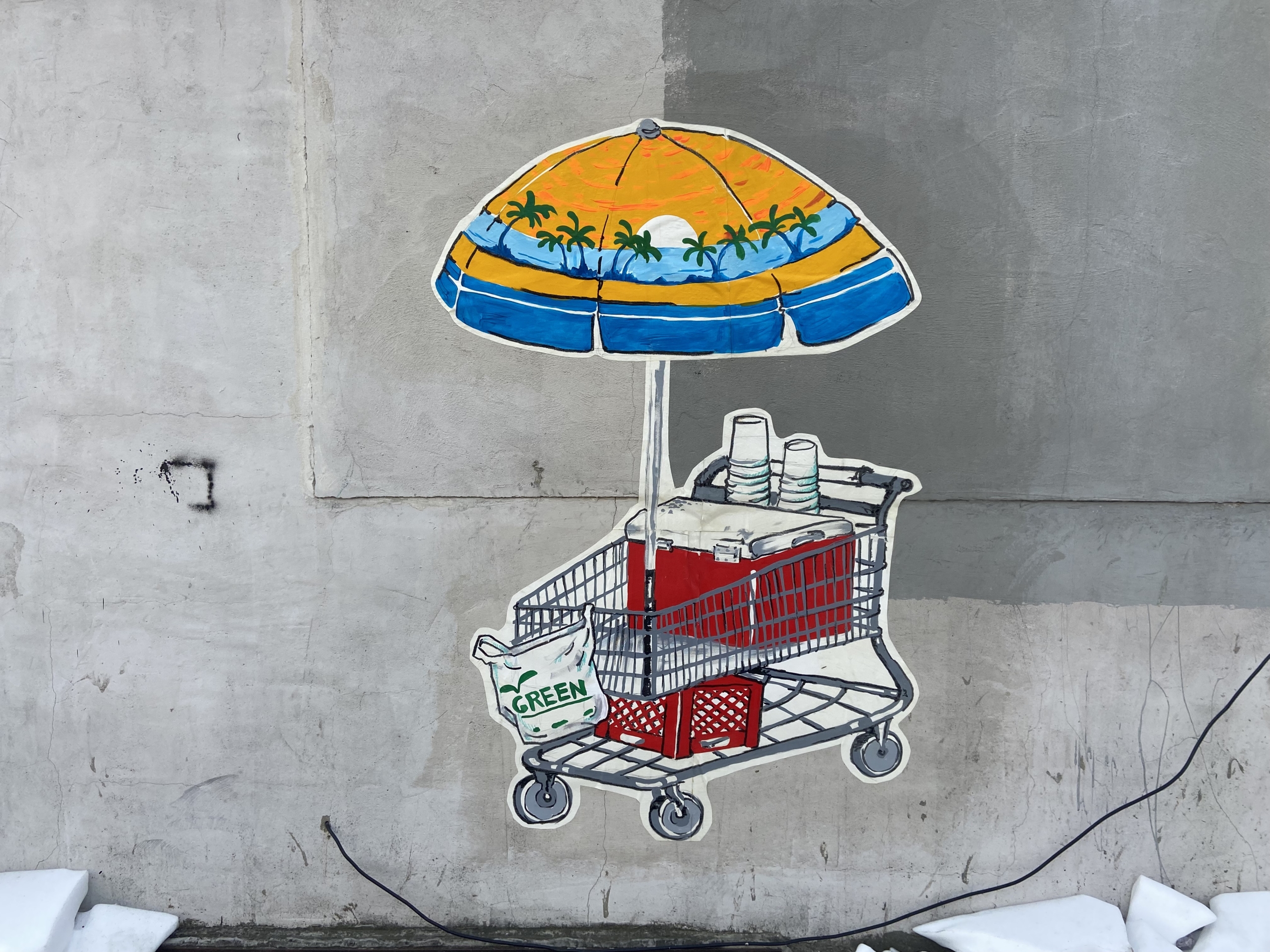
Shades of cherry red, aqua blue, and sunny yellow cover the wall of a building at the intersection of 7th and Mifflin streets in East Passyunk. The image of a tamale stand brightens up the street corner surrounded by low-rise rowhomes and a convenience store.
The image isn’t just a decoration. It is in commemoration of Emilio, a Philadelphia tamale vendor who was detained by Immigration Customs and Enforcement (ICE) in December.
Since the first Trump administration, artists have used murals as form of protest and resistance against mass deportations. The artwork commemoration for Emilio is one of many immigrant tributes around a city with more than 4,000 murals honoring its history and culture.
Juana Tamale, a nearby tamale restaurant, dedicated a pinned Instagram post to spread awareness about Emilio’s arrest. Community members expressed their devastation over the situation in the comments, recalling fond memories of him.
“We bought tamales from him for so many years,” one user wrote. “He and my daughter would wave to each other whenever we passed. This started when she was little, and they still would wave even now that she’s 19. I’m gutted.”
Emilio – whose last name is being withheld to protect his family from identification – was arrested on Dec. 7, leaving his entire stand and set-up vacant on the sidewalk.
David Gavigan was walking his dog through the neighborhood when he noticed Emilio’s absence from his usual spot on the street corner, he said. He knew exactly what had happened.
After talking with community members about their fond memories of Emilio, Gavigan reached out to his friend and artist Chris Kline about making a mural to remember him by. The image has no accompanying words or text.
“It doesn’t need to have a million words or have a name,” Kline said. “Even though it does [convey] ‘F–k ICE’, it doesn’t need to say that. It’s sad but it’s also strong.”
The Trump administration deported over 1.5 million people during its first term from 2017 to 2021 and is set to hit a new record of total deportations over a presidential term in its second, according to the Migration Policy Institute.
There were 4,727 ICE arrests in Philadelphia from Trump’s second inauguration to mid-October 2025, compared to 1,844 from September 2023 to Trump’s second inauguration, according to the Deportation Data Project.
“I think the [Trump] administration is banking on people not remembering or moving on,” Gavigan said. “What Chris did is a great example of not moving on; [Emilio’s] still here, and people remember him.”
Representing the Latino Community
A colorful mural in West Kensington at Front and Huntingdon depicts a father, mother, and child to a new home. They carry jugs of water. There are halos around their heads, and the family is surrounded by cactuses and mountains. This mural is known as “Families Belong Together” by Ian Pierce.
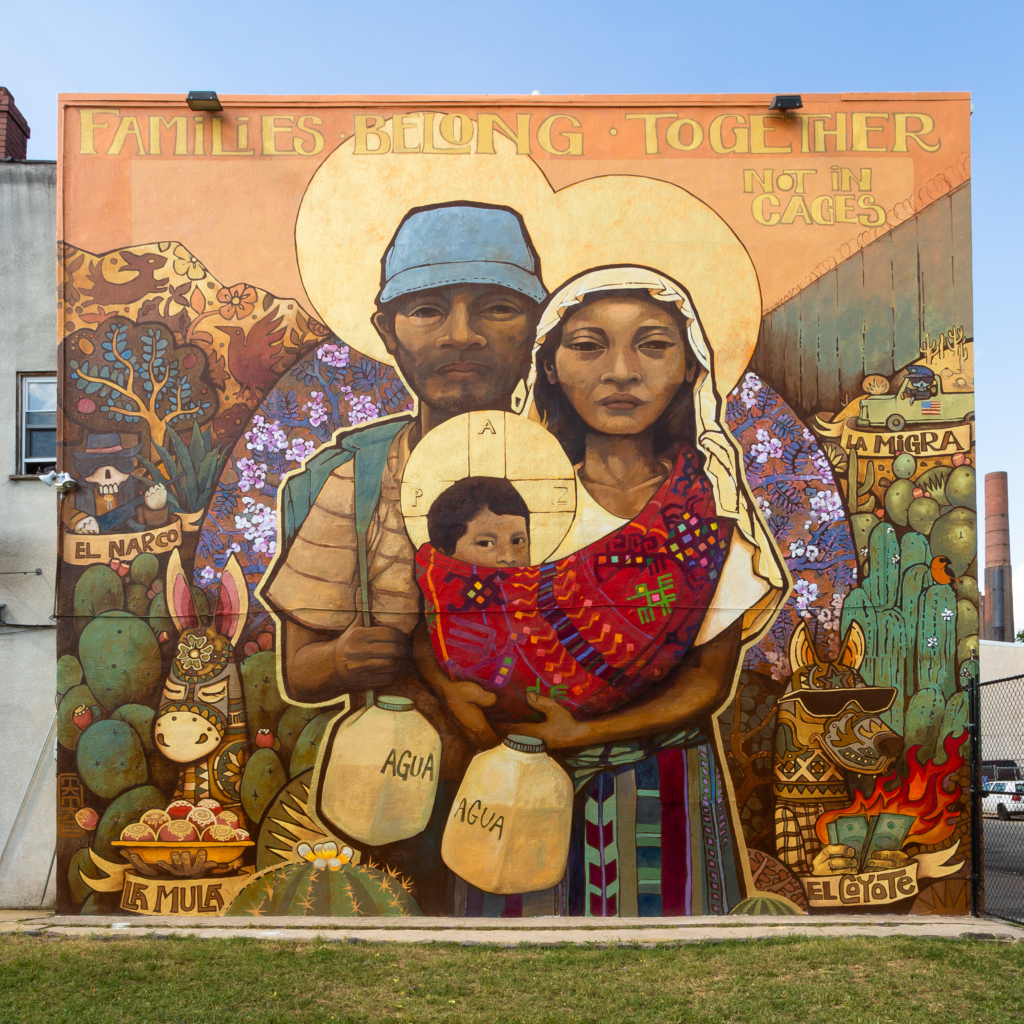
Mural Arts invited Chilean artist Pierce to come to Philadelphia back in 2017. As Trump’s first term and stricter immigration policies were put in place, Pierce wanted his first mural in the city to be about immigration, he said.
“To paint on a wall in a public space has a political meaning,” Pierce said. “It’s a responsibility from the artist with the community, so whatever I try to address must have a meaning in a broad sense. It has to be able to dialogue and bring up questions. It has to be something that people can sometimes feel uncomfortable with.”
The following year, Pierce collaborated with Betsy Casañas on “Sanctuary City, Sanctuary Neighborhood” on the side of the Providence Center building at the corner of 5th and Huntingdon. The mural shows an Afro-Boricua woman with symbols of the Puerto Rican Yoruba religion in her hair, like colorful skulls, candles, corn, and deities. It is meant to reflect the Puerto Rican immigrant community and pull the immigration crisis at the border closer to Philadelphia, Pierce said.
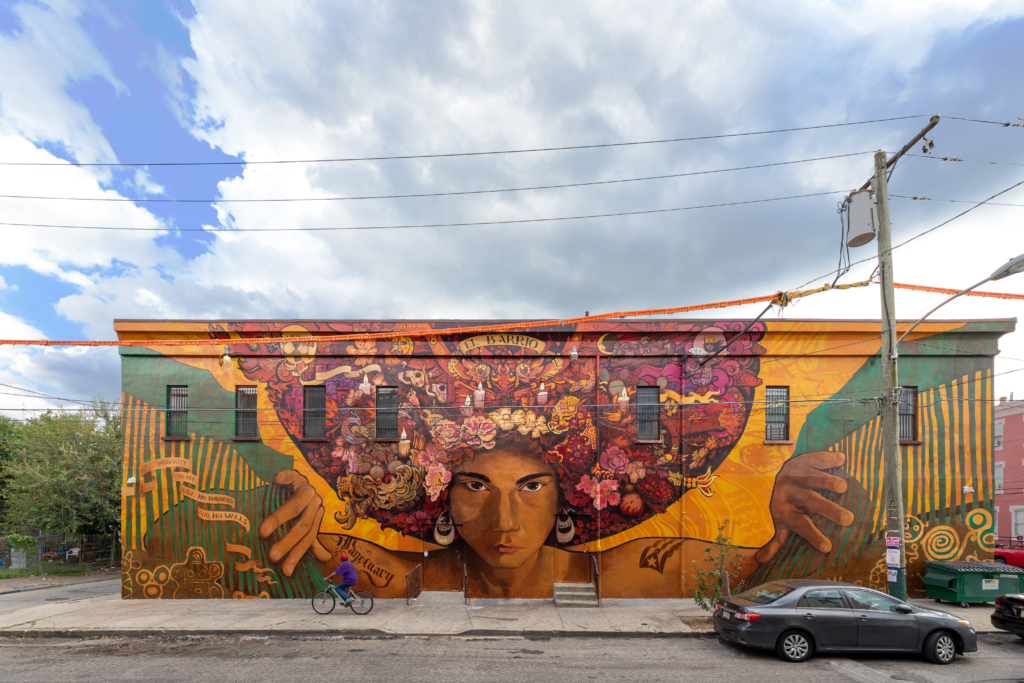
“I think that murals many times, especially now, have ended up with a lot of decoration and trying to be pretty,” Pierce said. “They are a way of standing up against very cruel politics coming from the government. Very unjust and unfair policies towards immigrants. It’s so absurd to say the United States is not an immigrant country. It’s just so racist.”
Both murals are nestled in Philadelphia’s Fairhill neighborhood, which has a roughly 80% Hispanic/Latino population, historically mostly Puerto Rican. Pierce worked with children from the neighborhood on both projects, involving them in the painting and conceptualization of the artwork, further entrenching himself in the community.
“People are scared, especially if they’re not born in the US, to stand up and say something against the immigration raids or government policies,” Pierce said. “I think it’s really scary.”
Centuries of Immigrants in South Philly
Artist Shira Walinsky’s mural “Farming Up The Mountain” on 7th and Emily in South Philadelphia shows several figures digging and farming in Bhutan. They stand in front of a mountainous landscape, surrounded by colorful representations of textiles from the Karen people of Burma.
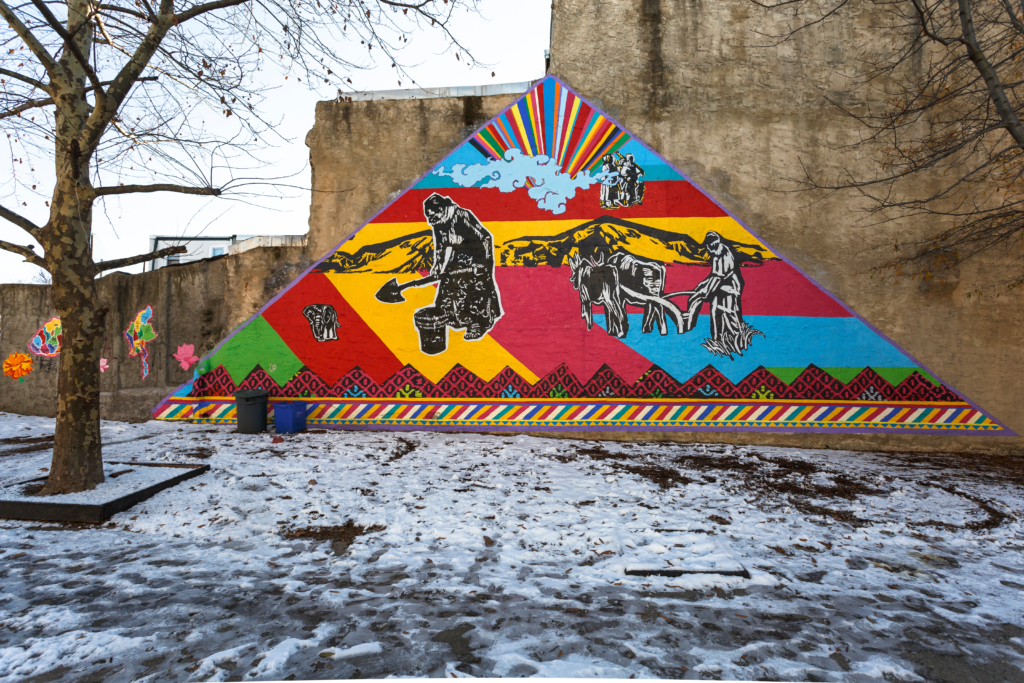
Walinsky has worked closely with diverse immigrant communities across the city to create murals that reflect not only immigrants, but refugees as well. Being based in South Philadelphia, she has worked with immigrants from Congo, China, Vietnam, Cambodia, Burma, and Bhutan, where those communities are most prevalent.
There are hundreds of Burmese and Bhutanese refugees who have settled in South Philadelphia, a drastic change from their agricultural lifestyle in their home countries. To help with the adjustment, the Nationalities Service Center (NSC) set up the Growing Home Community Garden on Emily Street for families to farm.
“I saw these intergenerational communities working together [in the garden], and I really wanted to show that,” Walinsky said. “I began more to think about what people bring with them – their culture, stories, values.”
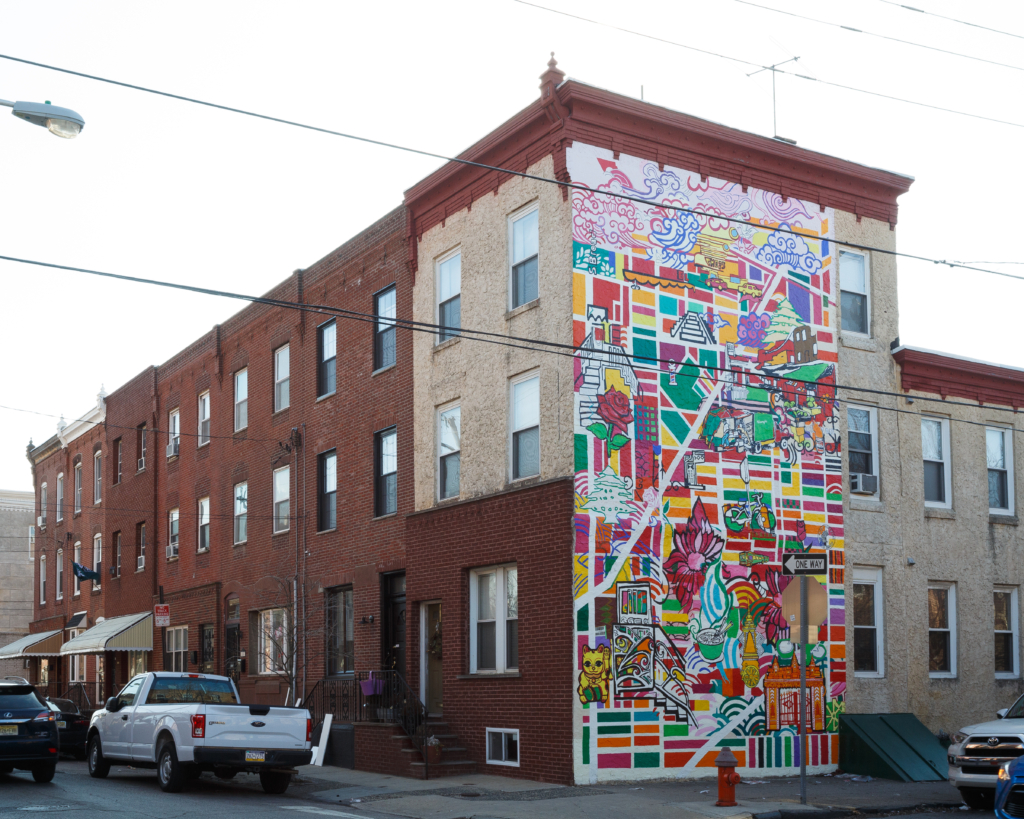
Walinsky’s “Migrating Home” represents a map of the South Philly/Passyunk area with markers of culture. There is a cedar tree from Lebanon, indicating the early immigrants who created the 9thStreet Market. There are also a Mexican pyramid and a Cambodian temple, an important place of worship for the Cambodian community in Philadelphia today.
“What I want is for people to see themselves in the mural and/or be curious about a community they don’t know as much about but feel a sense of connection and understanding through looking at that image,” Walinsky said.
With large populations of not only immigrants but also refugees settling in South Philly, murals in this area serve as a tool for acceptance and welcome.
Today, the Karen people have their own organization and are still farming and growing food across several community gardens in South Philly.
“I feel really lucky to live in a city with so many strong immigrant communities and organizations that support them,” Walinsky said. “It’s been a real honor to get to know different communities around the city.”
Comments