

From mob-run bars to modern havens, Philadelphia’s lesbian nightlife has a complicated past
By Ashlee Moore
Philadelphia’s gay bar scene took off shortly after World War II in what’s known today as the Gayborhood, a neighborhood bounded by 11th and Broad streets and Pine and Chestnut streets, according to Bob Skiba, curator of the William Way LGBT Community Center‘s John J. Wilcox, Jr. Archives.
“They were really seedy and usually run by the mob,” Skiba said. “It was generally considered a white male enclave, so people of color and women did not always feel welcome there. It became important for women to find spaces that were really theirs.”
One of the first well-known and well-documented lesbian bars in the 1960s was Rusty’s, located behind what is now Moriarty’s. At their peak, Philadelphia had as many as five or six lesbian bars operating at the same time through the 70s, while the 1980s became the high point of queer women’s bars with the opening of Sneakers, Mamzelle’s, and the short-lived Black lesbian bar Mahogany, according to Skiba’s lesbian and gay travel guides.
Skiba’s 20-year collection of archival documents and oral histories shows many of these spaces were centered on queer women at certain times or on particular floors but weren’t wholly dedicated to them.
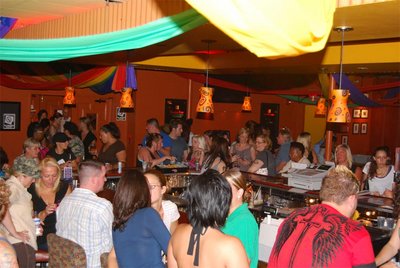
Sisters Nightclub was a hub for political action, according to Timaree Schmit, a former performer and producer at the lesbian club and restaurant until its closure in 2013, with organizers using the venue to raise money, gather signatures, and introduce political issues to new audiences through the shows Schmit herself produced there.
Queer bars were historically more willing to open their doors to community events for free, knowing that attendees would support the bar in return, she said.
In an era when queer people faced widespread discrimination in public life, lesbian bars offered a rare sense of safety and belonging, Schmit said.
Spaces like Sisters allowed queer women to socialize without the constant vigilance required in mainstream, mixed-gender venues, she added.
In mixed or straight spaces, unwanted male advances were so normalized that going out meant “you’re going to have to have your guard up the whole time,” Schmit said.
Chloe Davis, author of The Queen’s English, an LGBTQIA dictionary, noted lesbian bars were also sites where early forms of queer language, identity, and expression—such as butch and femme—were shaped.
By the turn of the century, even long-standing establishments like Sisters couldn’t compete with high overhead and nights that got slower and slower, Schmit said.
For Philadelphians like Amanda Khu, the opening of Val’s Lesbian Bar is an exciting chapter in the city’s history of queer bars for women. Before, queer nightlife felt “very gay men centric.” Now, she said, it feels like the “lesbian community can be like rooted here.”
Comments