

Fear of Ice is driving customers away from small Latino businesses
Fear of ICE hurts small Latino businesses in South Philadelphia
By Gloria Chuma
A big venue, food, servers, a DJ, decorations, party favors, and security were what Maria Angamarca had planned for her children’s baptism party. The fear of Immigration and Customs Enforcement (ICE) took that hope away.
“In Latino culture, our parties are always big,” Angamarca said. “You invite everyone—your family, neighbors, coworkers, and friends.”
For Angamarca, like many other Latinos, baptism is a formal introduction to the Catholic faith and is celebrated with loved ones.
“Baptism doesn’t happen two to three times, it only happens once,” Angamarca said. “I wanted my children to remember this time with all our family, that’s why we decided on a venue.”
Angamarca had paid the venue deposit, arranged the event menu, and her family members were flying from all over the country to attend her children’s baptism. But the party she worked so hard for never happened because of fears around deportation that resulted from Donald Trump’s reelection.
“After [Trump] won, we knew we couldn’t have a big party because no one would come,” Angamarca said. “People are scared.”
Angamarca settled for having the party in her brother’s basement with close family and friends present.
“We only had a small gathering and some food,” she said. “We wanted to be safe and not bring attention. I felt sad.”
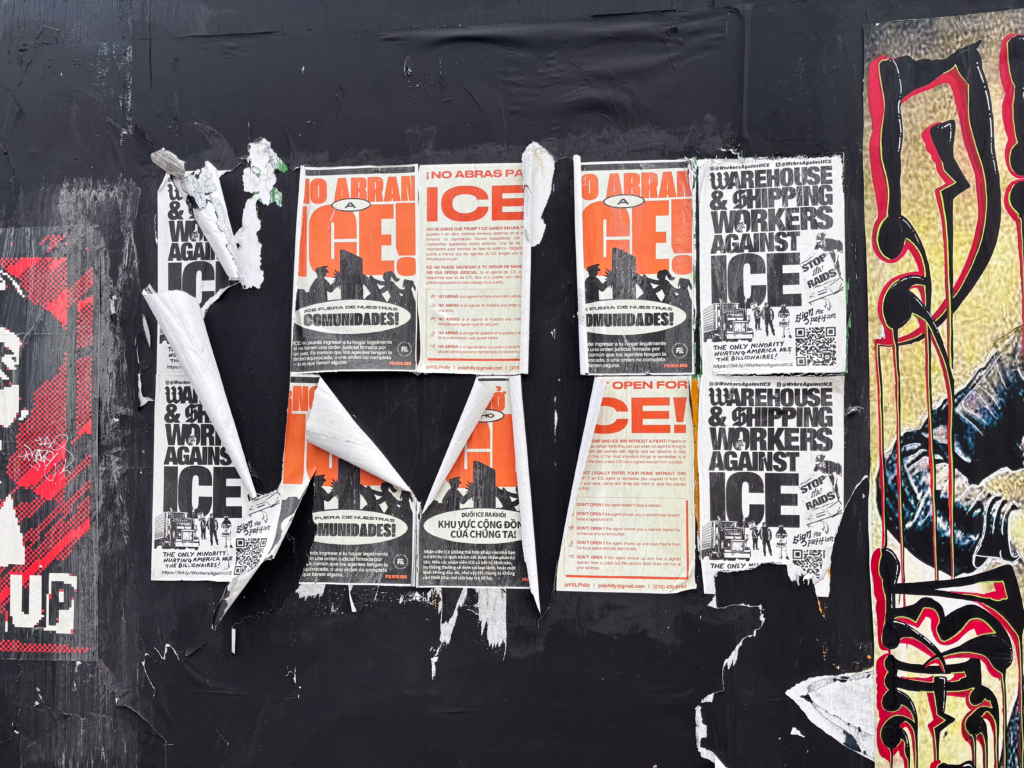
Angamarca is not alone as the growing number of deportations in Philadelphia has stoked fear in the Latino community, particularly around having large gatherings to celebrate personal and cultural milestones, for worry of raids by ICE.
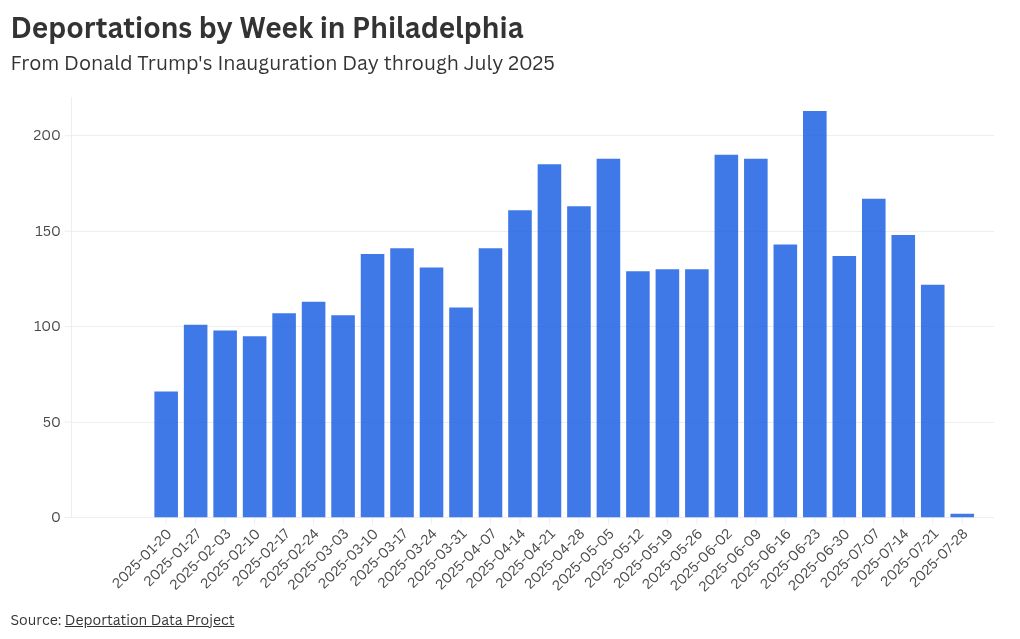
While federal data on deportations is not entirely accurate, data from the Deportation Data Project shows nearly 146,000 people, including about 3,750 in Philadelphia, have been deported from the country between Trump’s inauguration and July, when the data was last updated.
Immigrants comprise about 16% of Philadelphia’s population, the highest figure in eight decades, according to a study from the Pew Research Center. The Migration Policy Institute estimates that there are about 76,000 undocumented immigrants living in the city.
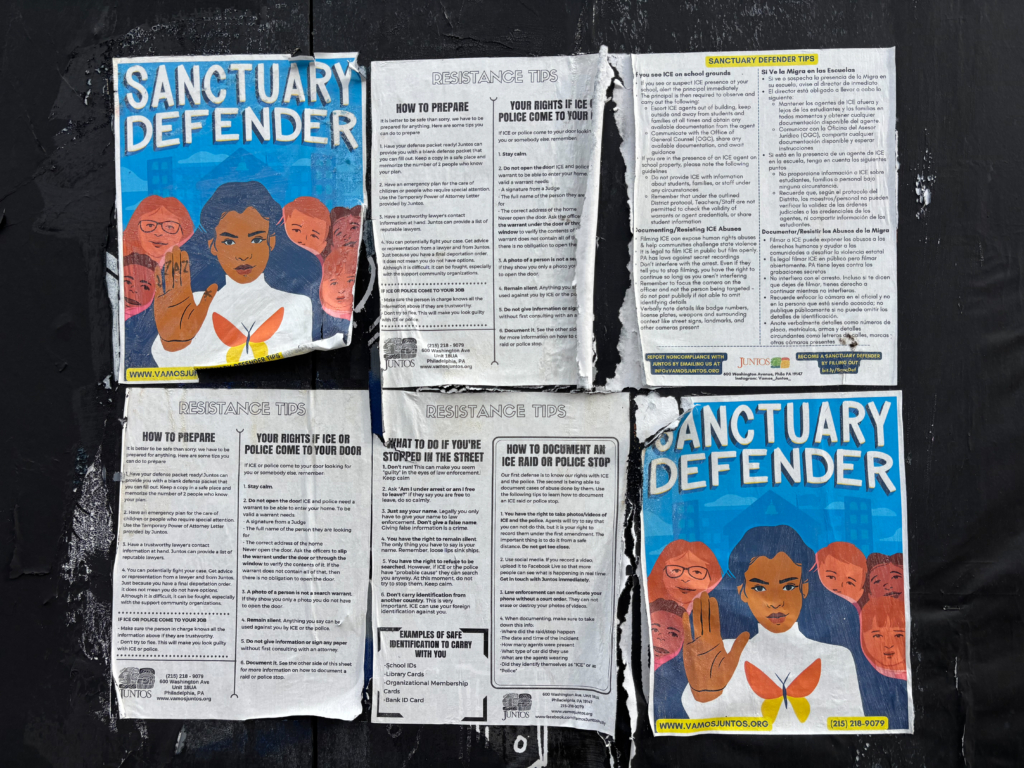
The ongoing ICE raids occurring throughout the country have left many immigrant residents fearful of even leaving their own homes, which has negatively impacted small businesses in the city. Events like quinceañeras, baptisms, and first communions drive an ecosystem of dress shops, bakeries, caterers, photographers, decorators, and gift shops.
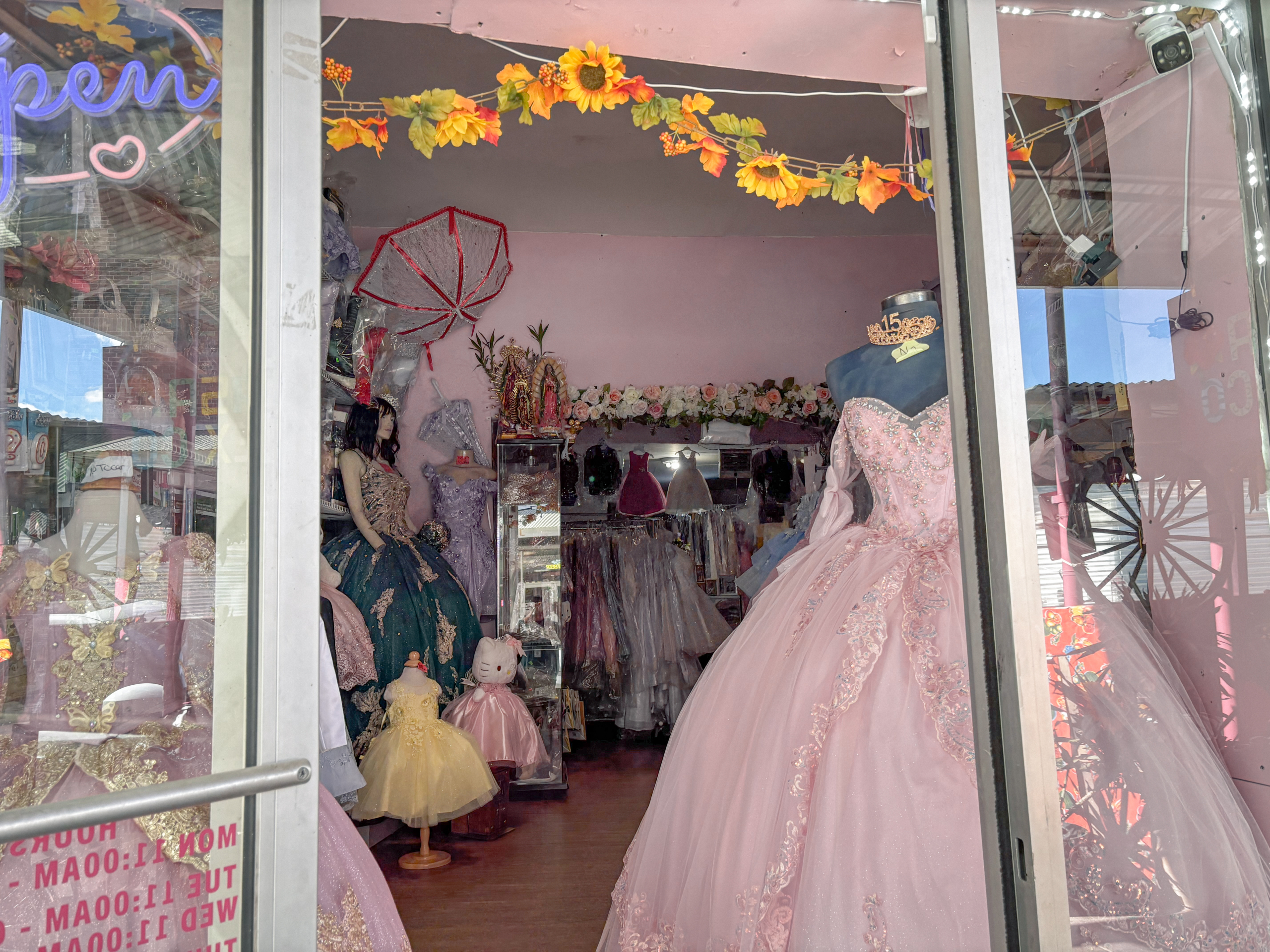
Quinceañeras are a traditional Latin American celebration for a girl’s 15th birthday. A quinceañera dress plays a pivotal role in this cultural celebration, as it symbolizes the child’s transition from girlhood to womanhood.
“There used to be a lot of sales because people weren’t scared of immigration,” an employee at a South Philadelphia dress shop, who was fearful of giving her name, said. “Now we might make one sale every two weeks.”
Other dress shops the employee has spoken with have experienced similar declines in sales, she said.
Immigrants comprised up 36% of the city’s self-employed owners of “mom and pop” businesses in 2022. A 2025 report from The Welcoming Center found filled critical labor gaps and sustained businesses by preventing closures, rather than replacing native workers
“People want the diversity of food, leisure, and hospitality options that Philadelphia has become known for,” Anuj Gupta, the CEO and President of The Welcoming Center, said. “And if you just peel back one layer of that, you realize that immigrants are driving that.”
Norma an employee at a South Philadelphia bakery, has seen the fear among immigrants firsthand. Clients no longer come into the store as frequently as before, due to the fear of being detained by ICE, and the shop has seen a drop in the number of quinceañera cakes they sell.
“Every eight days, we used to sell two to three quinceañera cakes,” Norma, who did not want to share her last name, said. “Now it’s unusual for someone to come and order a cake for a quinceañera.”
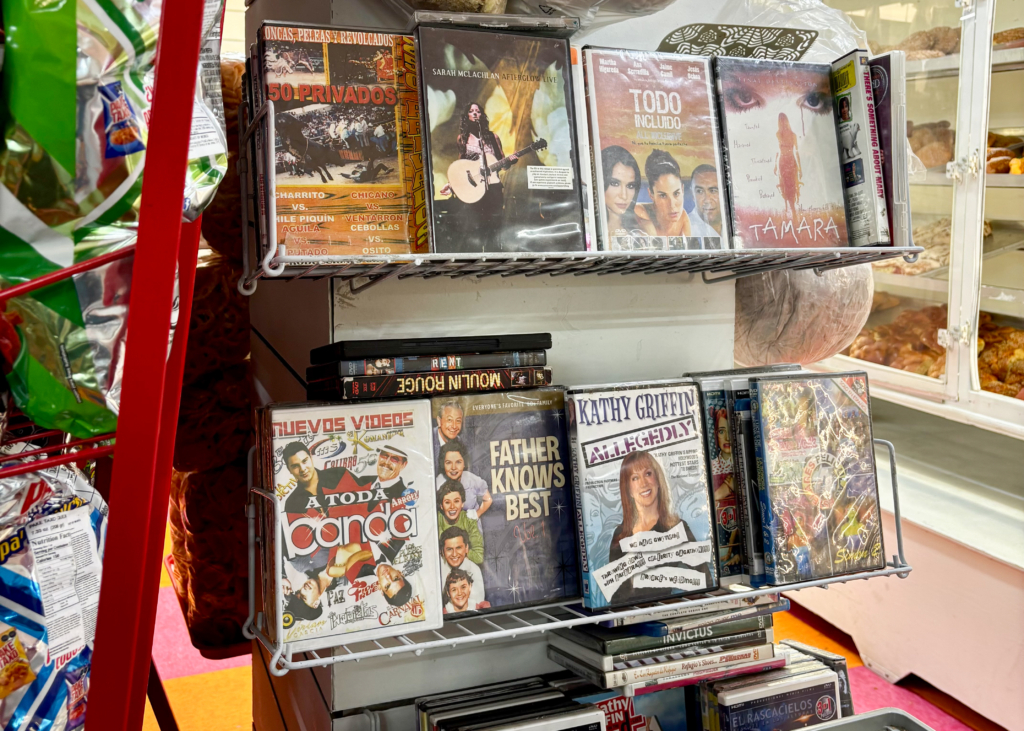
Like other stores in the area, Norma’s employer has had to increase the price of their products due to the decline in demand and increase in supply chain costs.
An owner of a gift shop in South Philadelphia has also experienced a decrease in sales due to the fear of ICE.
“I sell things like bouquets, teddy bears, things for Dia de Los Muertos…it’s a gift shop,” the owner, who was fearful of giving her name, said. “The majority of the people who come here are Latinos.”
She began her business during COVID when her husband got sick and eventually transitioned from selling things from her home to having her own commercial space.
Her prices have not gone up, but if sales continue to decrease, she will be forced to increase them, she said.
“With everything going on with immigration, people are scared to leave their homes,” she said. They only leave to go to work.”
“I mean, all you have to do is walk down any commercial corridor in Philadelphia and you realize the extent to which both the food service economy and arts and culture, immigrants are bringing so much more,” Gupta said. “But it is not top of mind when people are thinking about the relationship between immigration and the economy.”
He doesn’t see hope for the data to change next year.
“The data gap is about two years long, so 2026 will still reflect more or less the same story that we told in this year’s report because it will utilize 2024 data,” Gupta said. “It will be the year after that we start to see an impact.”
For TWC’s 2027 report, Gupta anticipates that there will be a net population decline, an uptick in poverty rates, fewer small business startups, a decline in educational attainment levels, and other economic indicators will trend downwards.
“The last 20 years in Greater Philadelphia have proven that being welcoming actually provides economic benefit to everyone,” Gupta said. “Without immigration, we simply don’t have a trajectory that supports population growth in the city or the counties.”
Gupta added that a challenge they’ll most likely face for their next report is collecting data.
“We have no idea what data sets will even be published anymore in the coming years,” Gupta said. “We don’t even know if we’ll be able to track some of this stuff.”
Despite the decrease in customers and sales for small businesses focused on events like quinceañeras, baptisms, and communions, many of them are still determined to keep their businesses alive.
“If you don’t work, there is nothing,” a South Philadelphia gift shop owner added. “We need to teach our children that one has to work to have what they want.”
Although Maria Angamarca didn’t have the party she dreamed of for her children’s baptism, she ultimately feels like she made the right decision.
“Immigration is picking up families, and children are being left without their mom and dad,” Angamarca added. “It’s sad hearing that this is happening.”